Why US Wealth Is Looking East
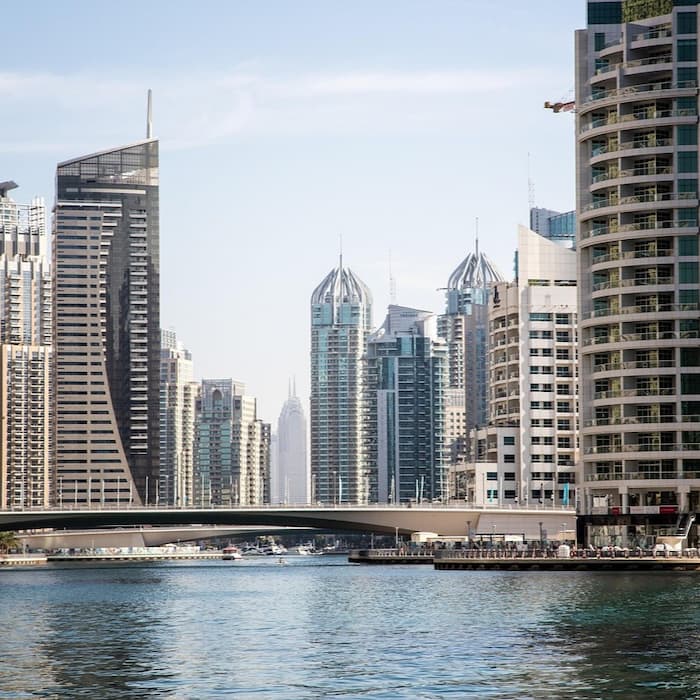
A prominent figure in Dubai”s business community, head of its chamber of commerce, talks about the reasons why the jurisdiction has flourished and should continue to do so, and reflects on some of the difficulties it has had to surmount.
We carry the following article from His Excellency Mohammad
Ali Rashed Lootah (pictured below), president and CEO of Dubai
Chambers. (WealthBriefing has covered the Chamber’s developments,
such as
here and
here.)
The article looks at the challenges that Dubai’s leaders have
faced as well as listing the achievements to date.
.jpeg)
His Excellency Mohammad Ali Rashed
Lootah
Dubai’s ascent as a technology, financial and business centre
over the past fifty years has been astonishing. It is now a rival
to some extent to hubs such as Hong Kong and Singapore; for
decades, it has been an important draw for non-resident Indians,
expats from the UK, the rest of Europe, and elsewhere. The UAE in
2020 entered into Abraham Accords with Israel, a step that broke
fresh ground.
There is even a growing link, so this publication has heard,
with cities such as Miami. Such rapid growth can bring about
issues: rising real estate prices (just look at the cost of
booking a hotel recently), more traffic congestion and demands on
infrastructure. These are, arguably, the signs of a boom and
those with memories stretching back to the financial crisis know
that no place ever rises in a straight line without obstacles.
All that said, the prosperity is undeniable, and wealth managers
have flocked to the jurisdiction, as this news service reports
regularly. We have, for example, also spoken to local regulators
about strategy, here for
example with the DIFC Authority.
As with all guest articles, for which we are grateful, the
usual editorial disclaimers apply to views of outside
contributors. To respond with ideas and comments, email [email protected]
and [email protected]
Family offices and private capital holders across the United
States and other mature economies are increasingly turning their
attention to the Middle East, with Dubai standing out as a prime
destination. This reflects a wider shift as private and family
investors pursue more sophisticated wealth management strategies
and seek stronger returns through diversified portfolios.
Recent changes in the legislative landscape – including the Dubai
International Financial Centre’s (DIFC) Family Arrangements
Regulations and enhanced property ownership rights for foreign
investors – have further strengthened the city’s appeal.
Dubai has rapidly positioned itself as a leading hub for private
wealth management, standing alongside established financial
centers such as Zurich, London and New York. The city combines
the hallmark features of these traditional centers, including
highly personalized client services, with a tech-driven,
innovative approach. The result is a hybrid model that blends
proven practices with next-generation solutions.
Dubai has built robust platforms catering specifically to
high-net-worth individuals and family offices, offering services
from estate planning and legal affairs to advanced investment
advice. These tailored solutions are crucial for family offices
seeking effective ways to manage and grow their wealth
effectively.
DIFC has played a pivotal role since 2004. By the end of 2024,
more than 800 family-owned businesses were based in the center,
with the leading 120 families and HNW individuals managing over
$1.2 trillion in wealth. Last year, 200 family offices set up in
DIFC, marking 33 per cent year-on-year growth.
This expansion in family-managed wealth has been mirrored by the
growth of family-owned businesses, which remain key drivers of
Dubai’s economy. In 2024, 59 per cent of the UAE’s family-owned
businesses were based in Dubai, reinforcing the emirate’s
position as home to the highest concentration of private wealth
in the Middle East.
Dubai’s appeal among global family offices is underpinned by two
defining strengths: stability and opportunity. Its favorable tax
environment sets it apart from Western markets. The UAE imposes
no capital gains or personal income tax and offers a highly
competitive corporate tax rate, significantly enhancing returns
for family offices.
Resident families and local investors are also becoming
increasingly affluent. By late 2024, Dubai was home to more than
81,000 resident millionaires. In 2025, this number is projected
to grow by a further 7,100 HNW individuals, bringing in more than
$7.1 billion in additional funds. By comparison, Switzerland and
Singapore are expected to gain 3,000 and 1,600 millionaires
respectively, while the United Kingdom is set to lose 16,500.
These figures highlight Dubai’s growing appeal over traditional
wealth hubs.
Dubai’s rise as a wealth management hub is also driven by its
strong and resilient economy, supported by proactive regulations
that protect investments and ensure a transparent,
business-friendly environment. This is particularly attractive to
U.S. family offices seeking secure and rewarding international
opportunities.
Geographically, Dubai’s location offers easy access to
high-growth markets across the Middle East, Asia and Europe,
projected to expand by 3.5 per cent, 4.7 per cent and 0.9 per
cent, respectively. The city’s world-class airport has ranked as
the busiest global hub for international passengers for 11
consecutive years, connecting investors to over 2 billion
consumers within a four-hour flight.
This proximity to high-growth markets, combined with Dubai’s
commitment to innovation, strengthens its role as a global center
for family offices. Forward-thinking smart city initiatives and
advancements in artificial intelligence, fintech and blockchain
have positioned the emirate as a leading technology hub.
As regional wealth grows, so does demand for luxury goods, real
estate and private banking, creating new avenues for investment.
The rise in HNW individuals is generating opportunities for U.S.
family offices to expand their global footprint through
partnerships and joint ventures. Dubai’s 20+ free zones further
provide tailored infrastructure to support diverse sectors.
Increasing numbers of high-profile investors are making the move.
Michael Platt, co-founder of BlueCrest Capital Management,
relocated his family office to the UAE, while Norwegian shipping
billionaire John Fredriksen also moved to Dubai, citing high
taxes in the UK.
Dubai continues to actively position itself as a global capital
hub. Initiatives such as the Dubai Business Forum have showcased
the city’s significant investment potential to audiences
worldwide, with editions held in the UK, Germany and China. The
next edition will take place in New York City on November 12,
offering U.S. investors a first-hand view of Dubai’s
opportunities.
The growing shift of US and global family offices to Dubai
reflects a strategic alignment with today’s economic realities
and tomorrow’s opportunities. With its tax advantages, advanced
wealth management services, economic stability and strategic
location, the emirate has emerged as one of the fastest-growing
centers for private wealth.
Combined with its dynamic, diversified economy and exceptional
quality of life, Dubai offers family offices an exceptional
platform to diversify their portfolios and capture growth across
emerging markets. These unique advantages ensure the city is more
than just a prominent destination for investors – they position
Dubai as the future of global wealth and influence.
link