‘My grandparents built this to make a small living’
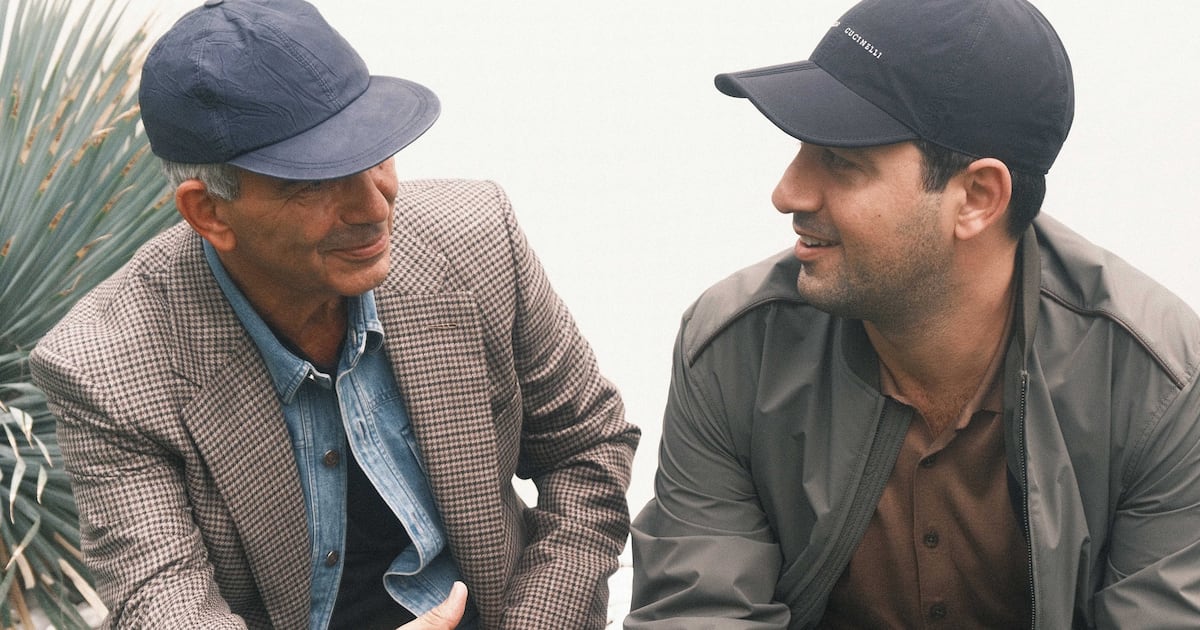
As Michael Chalhoub describes his ascent to leading the family empire, he speaks with the deliberateness of someone who never fully expected the baton to land in his hand. “I didn’t think that it would lead me to this one day,” he says, still sounding faintly surprised.
Yet on January 1, 2025, he officially stepped into one of the most influential roles in the Middle East’s luxury landscape as chief executive of the Chalhoub Group. He succeeds his father, Patrick, who moved into the role of executive chairman after more than two decades at the helm.
Michael’s appointment was far from a coronation. “Last year, the executive committee ran a process with two internal candidates and a few external candidates. It lasted six months and I got chosen,” he explains. “I feel incredibly lucky, incredibly proud and very humbled to write the next chapter of this beautiful book.”
Although born into a dynasty that has shaped the region’s retail landscape for seven decades, Michael initially showed little interest in joining it. After earning an MBA in business administration from Harvard Business School and another in international affairs from Université Paris-Dauphine, he launched Sport360, a successful media venture. “I’m an entrepreneur at heart,” he says.
It took the pandemic to bring him back. “I wanted to help at a time when everyone was suffering because of Covid. I was rolling up my sleeves and thinking, now is the time I can really help out.” He joined the business in 2020, overseeing strategy, growth, innovation, investments and joint ventures, and was quickly pulled back into the family’s long-standing conversations. “Dinner debates were about how to push this brand or that, or how to reimagine things for the 21st century. It was very present in our everyday life.”
To understand the weight of the role he now holds, one must understand the arc of the group itself – a story shaped by resilience. In Damascus in 1955, his grandparents Michel and Widad Chalhoub opened a boutique for Christofle to bring European style to the Middle East, soon followed by Jean Patou and Baccarat. “My grandfather and grandmother built this to make a small living,” he says. “And it slowly grew into something.”
Political instability pushed the family to relocate to Beirut in 1965, civil war forced a second move to Kuwait and the Iraqi invasion of 1990 triggered a third upheaval to Dubai. Each move meant rebuilding. “My grandparents stayed in Kuwait and rebuilt with a few employees, but obviously everything was destroyed,” Michael says.
Those upheavals forged a resilience that underpins the powerhouse of today. The group now owns 10 brands outright, partners with more than 450 international luxury labels and operates more than 950 stores across the Middle East. Last year, it reported luxury sales of $12.8 billion – a six per cent rise despite a two per cent global downturn. From only 100 employees in the early days, Michael proudly notes how his father “grew this to employing 16,000 people”.
As the next generation to lead the group, he says: “It’s incredibly humbling. It feels like I’m standing on the shoulders of giants.”
He has wasted no time. Rejecting the idea of a singular “Middle Eastern customer”, the group has built a hyper-local presence, with offices in every major city, from Kuwait to Jeddah. “The Dubai customer is different to the Abu Dhabi customer, who is different to the Qatari or Saudi customer. It is important to have a presence in each place.”
Intelligence teams feed real-time customer insights to leadership and brands. To listen properly, Michael has spent much of his first year on the road. “This year has been about listening and learning – Panama in September, Jordan and Egypt in October, Kuwait this week, Riyadh last week.”
His philosophy is encapsulated in a phrase that has become a cultural mantra within the organisation: servant leadership. “The frontliners are our bosses,” he says. “The customer is our boss. The information flow must go both ways.”
While the group’s success has long been rooted in partnerships – its relationships with Louis Vuitton and Chanel date to 1983 and with Christian Dior to 1979 – he insists the future requires a more balanced equation. “We need to reinvent ourselves. We can rely on our partners, but we can’t rely on them forever. We need to build our own equity and our own brands.”
This evolution began under his father, who championed in-house ventures such as the fragrance brand Ghawali (2016) and Level Shoes (2012), now expanding into the US and home to its own men’s and women’s lines, Forsa and The Lline. The family have also entered the crowded bag market with Makette, launched in November with three minimalist silhouettes priced from Dh3,900 to Dh4,950.
Having advised global luxury houses for decades on how to thrive in the GCC, the group has an clear view of what customers want – and what is missing. “We notice the white spaces,” Michael says. “Sometimes brands dismiss them. We don’t think they should.”
This insight has guided investments in brands such as Willy Chavarria, the bold American label steeped in social justice – a surprising choice that signals a wider, more adventurous vision. “We studied this carefully. We innovate, create or invest into white spaces. Investing lets us accelerate.”
The goal is not to replace legacy partners, but to create a portfolio that spans the full spectrum of modern luxury – from storied maisons to boundary-pushing newcomers. And the footprint is no longer regional. Following expansion into Latin America, the group now operates in Panama, Colombia, Chile and Peru, with a $100 million business stretching from Santiago to Saint Barthélemy. It is also growing in sub-Saharan Africa.
“What’s most important is to stay on our toes and reinvent ourselves before the landscape changes, because it is changing so fast. Resilience means diversification. We don’t want to put all our eggs in a few adjacent baskets.”
Michael’s entrepreneurial instincts also led to The Greenhouse, the Chalhuob group’s start-up studio and incubator, created to capture the energy of emerging talent and new ideas. “Our customer is rapidly evolving and we need to evolve even faster.”
While staff at the company speak of Patrick’s warmth, his ability to remember every name, his steadiness through geopolitical storms, Michael, by contrast, is quickly earning a reputation for accessibility and curiosity. “The hardest thing,” he admits, “is managing the old with the new.”
So what comes next? “We’re working on a few exciting new brands,” he says. “Some creating a buzz globally, but underrepresented in the region. And we’re building more of our own brands. There is a lot to come.”
The son who once avoided the family business is now steering it into a new era. “It is important to realise we were very lucky to be in this fantastic country, in this fantastic region, accompanied by these fantastic brands. It came with a lot of hard work, and I’ve learnt from my family about resilience and perseverance, because to start a company from scratch not once, not twice, but three times, is rare.”
link