Family office finance trends enter Monte Carlo discourse
One of the best barometers of themes and business models discussed in the investment world is the annual IMpower FundForum in Monaco, traditionally held in June. Before the Covid lockdown, family offices were barely mentioned at the summit, convened in the shadow of Monte Carlo’s famous Place du Casino. But since then, they have become a major area of focus.
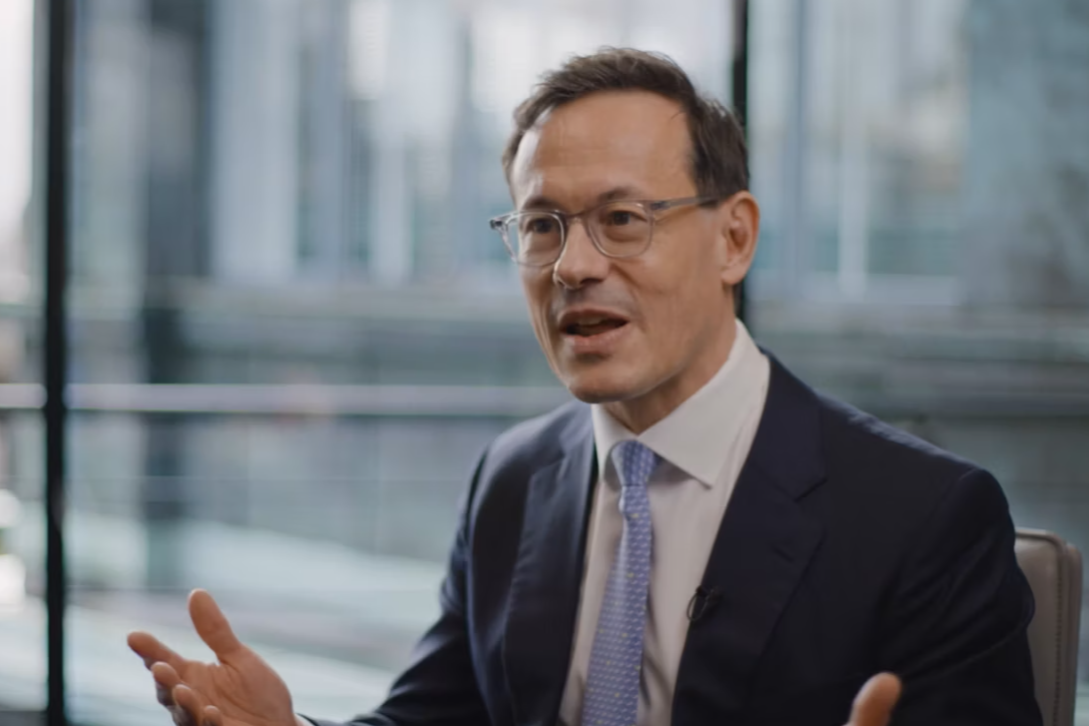
Of the 1800 wealthy families served by Citi Private Bank through 10 different booking centres, 80 per cent boast members, operating businesses or assets invested in more than one country, revealed Hannes Hofmann, global head of the family office group at Citi, speaking at the event.
This globalisation is “something that is not going to change. That is a very deep trend that is a strategic reality,” said Mr Hofmann, shortly after flying in from meeting family clients in Atlanta in the US, to address the keynote Monaco session addressing the needs of next generation investors.
He pointed to evidence from the recent Deloitte survey, that by 2030, family offices will manage $5.4tn, eclipsing the entire hedge funds industry, once seen as the playground of the biggest institutional investors and ultra-high net worth individuals.
Geopolitical turmoil
Yet despite their increasing global footprint, many of these families are struggling to get into their stride, believes Mr Hofmann. Just 15 per cent of them feel well equipped to deal with geopolitical turmoil, he said.
“We do a lot of work to help people become resilient, risk aware and to work in this rewired geopolitical reality that we live in,” said Mr Hofmann, during a lively panel moderated by Professional Wealth Management.
“These families are global businesses. Global investing is not changing, but I think people have to be more conscious about where they put their assets, who they partner with, and how they create safety in a multipolar geographical world.”
The families he speaks to during trips to the US, the Middle East and Asia, are all confident of the growth and “exceptionalism” of their own region. What unites them all is their belief in the digital revolution and the investments which will benefit from it.
“When we look back in 100 years, we are going to say this was the century of artificial intelligence and massive technological change,” said Mr Hofmann.
Analysing the geopolitical turmoil we have been living through since Russia’s full-scale invasion of Ukraine in 2022, followed by increasing conflagrations in the Middle East, has never been one of the key skills of the investment industry, something which many speakers at the forum discussed.
But there was also a collective admission from wealth and asset managers that they must raise their game. Indeed, managers must be conscious of both opportunities and risks, according to Nicolas Forest, chief investment officer at Candriam, the €155bn Luxembourg-based multi-asset specialist, owned by New York Life Investments.
European autonomy
In a world of “geopolitical fragmentation”, Candriam is working on a newly-devised “European autonomy” investment strategy, “to really highlight and overweight all the companies that would be instrumental in this autonomy”.
This is partially necessary because US Treasuries are no longer a safe haven, he said, bearing in mind increasing risk of an American recession. “This is a major issue for our investors,” said Mr Forest. “It’s not just because of the military policy or because of the economic cycle. This is because of geopolitics. Maybe it’s just the beginning. But we believe that we need to be risk aware, and we believe clearly that geopolitics is a risk and we need be appropriate in our response.”
The use of data is becoming increasingly important for banks and the families they work with to analyse investment opportunities as well as the shape and direction of the society we live in, said Nicolas Syz, head of private banking at the Geneva-based Syz Group.
Describing the totally different landscape shaping his previous career in food technology, Mr Syz talked about how “technology and data were driving the business”, and much of his time was spent researching consumer preferences.
“Within the financial industry, it’s very different. Unfortunately, for some cases, it’s the product that that drives the [bank’s relationship with the] customer and not the data or their needs or the solutions.”
In order to improve relationships with families, forward-thinking banks must arrive at the “sweet spot”, leveraging the combination of AI and data interpretation to help make the investment adviser’s work more efficient. Banks must “spend much more time” and resources understanding the dynamics of wealthy families, he believes.
Relationships over transactions
As part of the second generation running a family owned bank — launched by his father Eric in 1996 in Geneva, to give wealthy investors access to institutional investments, including hedge funds — the younger Mr Syz believes business models must be gradually changed to adjust to the mentality of younger investors. The key difference to previous generations, he said, is the notion that wealth management is about relationships rather than transactions.
Back in 2021, together with his brother Marc, who oversees the private assets arm of the business, Mr Syz insisted on launching a digital assets platform. It was important for them to innovate, “rather than being stuck in our current business model”, he revealed.
As a family-owned bank serving several generations of families, it is vital to “always put yourself in the shoes of your clients and actually anticipate and remain agile”, he said, analysing information flows and client behaviours, with the assistance of AI.
“If you’re stuck in your current business model, you might lose out and your business will become redundant. So I think challenging that status quo is always important, and I think at the family level, it’s always with the intent of certain clients for the future.”
Developing nations
Many families with representatives in the Gen Z cohort, embracing AI and social networks, are based in the developing nations of Africa and Asia, said Sophie Chardon, group head of sustainable investments at Lombard Odier in Geneva. She expects more exposure to emerging markets, relative to the current favourites of the US and ‘Old Europe’, in increasingly diversified portfolios, embracing key themes including lifestyle and healthcare.
One of her overarching themes is replacing redundant infrastructure, particularly in Europe’s obsolete water-supply systems.
These sustainable parameters, although ridiculed by the US Republican party and some populist European politicians, are now firmly imbedded in investment principles for global families and their asset managers, she told the Monaco audience.
“Sustainable investment is no longer just about doing good things for the world,” said Ms Chardon. “It’s about fulfilling the needs we all have. And the capital is definitely going there.”
link