


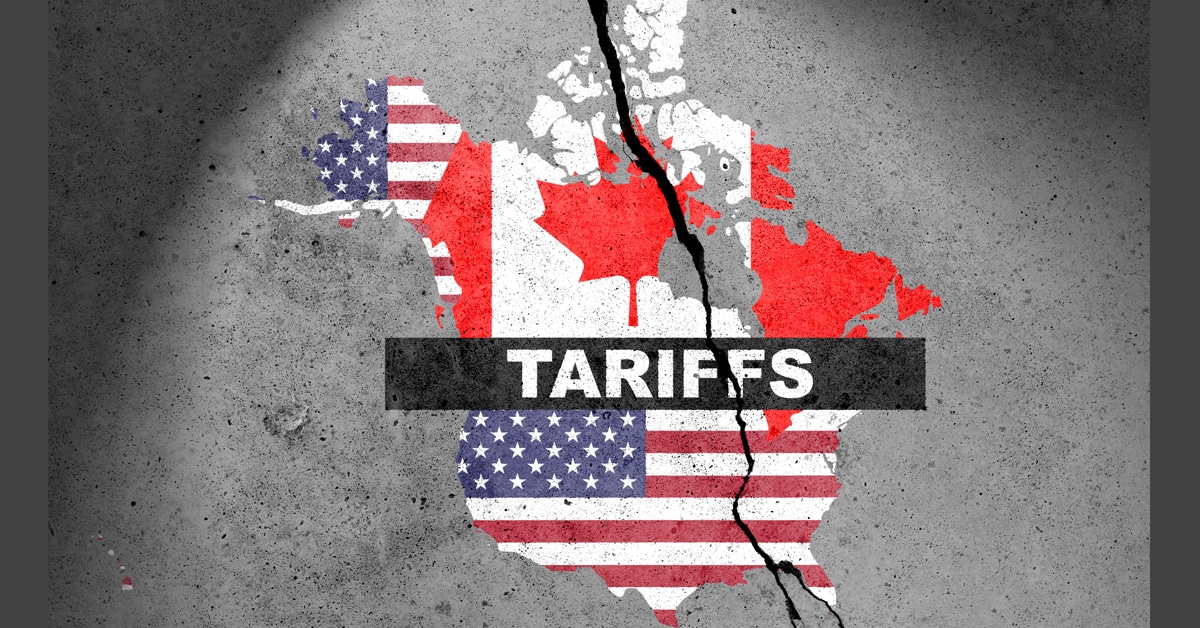
In early March of this year, the announcement of 25 per cent blanket tariffs levied on all goods imported to the US from Canada sent the equestrian industry into a panic. Industry stakeholders feared the US tariffs, and retaliatory tariffs issued by the Canadian government, would add devastating costs to goods such as stable supplies, tack, farming equipment, feed, veterinary medicines, horses and breeding products, and many other industry staples. There were also worries about the impact extra costs associated with horses crossing the border for training and showing would have on the North American competition circuit.
In mid-April, it was announced that Canada-United States-Mexico Agreement (CUSMA) would remain in effect for qualifying goods that were mostly made or assembled in the United States, Canada, and Mexico. The continuation of CUSMA meant that many facets of the horse industry were protected from tariffs.
CUSMA originally came into effect in 2020 to replace the North American Free Trade Agreement (NAFTA). Historically, it has enabled the North American equestrian community, and especially the sport horse industry, to mutually benefit from shared resources and easy movement of horses and supplies across the border.
Initial uncertainty
As a result of CUSMA staying in effect, many equestrian industry business owners who were bracing themselves for disaster instead found themselves more or less unaffected. Thomas Harbom, CEO, President, and founder of Champion Shavings Corporation, told HorseSport.com that little has changed with his business since the tariff situation began.
“In the beginning, there was a lot of uncertainty, not just for us, but for all industries,” Harbom said. “Everyone was on their heads not knowing where this was going. But we’ve seen very little impact.”


Thomas Harbom of Champion Shavings making a presentation at the Royal Horse Show. (Ben Radvanyi Photography)
Champion Shavings, a Canadian company, distributes high-quality bagged shavings and pellets to both the US and Canada from plants in both countries, serving equestrian shows, feed stores, and private farms. Although the highly-sought-after Canadian softwood lumber is tariffed, wood shavings are a CUSMA-compliant lumber byproduct manufactured in Canada and remain tax exempt.
“On the American side, initially there were a few customers who were very worried about the border crossings and the added cost of buying in Canada, but almost as fast as the tariffs were issued, they were repealed again,” Harbom said.
During the initial tariff announcement at the beginning of this year, a major US show cancelled their order with Champion Shavings to sign with an American provider instead, realizing afterwards that Champion Shavings would have been the cheaper option.
“We really only saw a hiccup with that one customer. And it was the timing in March, and the uncertainty. Nobody knew where the tariff situation was going, and we couldn’t give assurance one way or another.”
When the dust cleared in early April, Harbom turned his company’s efforts towards letting customers know that their orders would not be affected.
“As a Canadian company that wanted to continue to have success, we had to change our marketing with American customers to let them know the tariffs are not affecting the pricing and it’s business and usual, and nothing has changed. Really quickly, we were able to get in front of the message and communicate with our customers.”
Higher costs, fewer horses
Lana Smith, proprietor and operator of Rosenol Performance Horses, has observed a different effect of the tariff situation. Rosenol Performance Horses is a family-run, full-service equestrian facility located in Prince George, British Columbia. Smith, an EC-certified coach, teaches lessons and breeds and sells horses within Canada.


Lana Smith is the owner and operator of Rosenol Performance Horses in Prince George, BC. (Cassidy Nunn photo)
Smith hasn’t imported or exported horses to the US since the trade war began, but she’s found the market for buying Canadian horses has been transformed into a more competitive seller’s market since the tariffs, making it a lot more difficult for her students looking to buy.
“It used to be that you could buy cheaper projects in the fall, but nothing is cheaper this year,” Smith told HorseSport.com. “I have clients that are buying and there’s nothing out there they can afford anymore. I’m on all the Facebook forums and there’s a constant undertone of people looking for affordable projects for the winter, and there just isn’t anything out there. Even barely restarted Thoroughbreds are sometimes going for ten times what they used to.”
Previously, there were concerns in the industry about tariffs on horses exported to the US, causing Canadian breeders to change plans about selling to the States in the early days of the trade wars. However, there are currently no additional tariff-related fees for import or export of horses under CUSMA. Additionally, breeding products like semen remain tariff-free, and horses entering the country temporarily for training and competition purposes are also duty-free.
The reason behind rising horse prices and fewer available horses might lie farther from home. Fewer horses imported from non-CUSMA countries for the US market may be the reason why buyers are seeing fewer available horses and increased prices for horses bred in Canada. Currently, horses imported from Europe to the US can be subject to tariffs anywhere from 10–20 per cent of the sale cost, creating a hefty increase on already pricey sport horses and a trickle-down effect to Canadians looking for horses south of the border.
“I do think that with the rising cost of everything, people are starting to look closer to home before branching into the import side of things these days,” Smith said.
Smith notes the rising price of horses might also be the result of the rising costs of things like transport, stabling, and feed. Smith has even noticed a steep jump in her insurance costs.
“I tend to base my prices on the year the horses are born, and then as they get older, their quality and abilities factor in as well,” said Smith. “But I also base the price each year on what it costs me on average to raise them. And that cost has climbed. I’ve gone from charging $10,000 for my weanling foals to $15,000 as a base price in the last two years.”

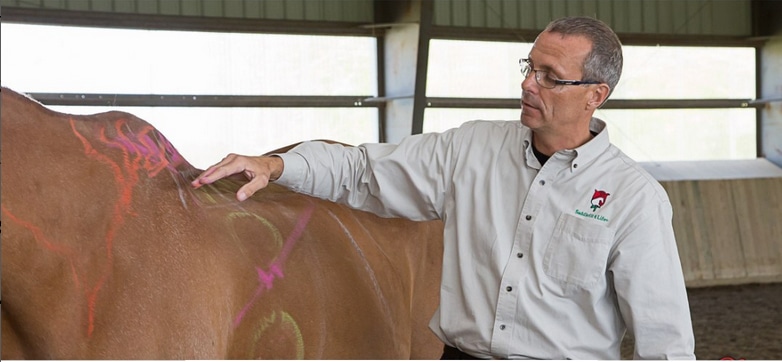
Master saddler Jochen Schleese owns and operates one of the largest saddle manufacturers in North America, with a 12-person manufacturing team in Holland Landing, Ontario, and a total of 80 employees worldwide. (Schleese Saddlery photo)
Making adjustments
Although there are no tariffs on products mostly manufactured in CUSMA countries, the tariff situation has prompted many Canadian manufacturers of equine products to make supply chain reviews. In some cases, such as that of Canadian saddle manufacturer Schleese Saddlery Ltd., they’ve come out the better for it by making small adjustments to their manufacturing process.
“There are a few things that are excluded [from CUSMA] and we do have to pay the tariff, but they’re of low value,” Miriam Boutros, saddle ergonomist and Managing Director of Schleese, told HorseSport.com.
“We get our leather from Europe, but we do get some materials from the US. We’ve tried instead to source them within Canada and elsewhere,” said Boutros. “It wasn’t really a big shift, just things like screws and nails, and now we’re saving on the exchange rate and shipping hassle.”
Founded in 1986 by German-born master saddler Jochen Schleese, the 12-person manufacturing team at Schleese Saddlery is located in Holland Landing, Ontario. Schleese is Canada’s only major manufacturer of custom-fitted saddles for showjumping, dressage, and western riding. Including the extended company of saddle fitters and distributors and the division in Germany, the company has about 80 employees total.
Saddles and saddlery imported from the US were tariff-free as manufactured goods under CUSMA. However, in early March, the Liberal government placed a 25 per cent tariff on English saddlery originating from the US as part of their retaliatory tariffs on US imports. At the beginning of September, Prime Minister Carney removed most retaliatory tariffs on US goods (except for specific duties on certain US steel, aluminum, and auto items), including the import of American-manufactured horse saddles and accessories.
Boutros said that the Canadian tariffs on US tack had little positive effect on their sales, because most Canadians don’t import American-made tack to Canada. There are few American saddle manufacturers that specialize in English tack, leaving Schleese without competition in the North American market.
“People love that we’re local and we have saddle fitters in most provinces. They love the local service and that the saddles are made here in Holland Landing, but they’re not buying our saddles to avoid buying a US saddle,” said Boutros.
Boutros also said there hasn’t been a decline in American sales from customers who don’t want to buy Canadian goods.
“We manufacture in Canada, but our sales are about 75 per cent in the US and 25 per cent in Canada, just because of sheer size,” said Boutros. “We don’t hide that we’re from Canada. It hasn’t affected us negatively because we’re a Canadian company. It could be that there were a lot of people wanting to support the US, but they don’t have another way to go.”
In general, Boutros has the feeling that US clients have been watching their spending a little more than usual, whether because they’re being affected by the ongoing trade wars, or they’re experiencing situations like job uncertainty, higher energy and grocery prices, etc.
“People are more interested in used saddles, but they’re still buying from us. We keep waiting for it to be a big issue, but at the end of the day, when people have horses they’re already spending money that, if they couldn’t afford it, they wouldn’t be spending. If you have no job, you’re selling your horse. But if you’re keeping your horse, the income level of most people is not affected, and they’re spending. The stock market is doing well, so people are.”
If nothing else, the tariff situation has caused Canadian consumers to become keenly aware of where products are manufactured, and to avoid imported goods in favour of Canadian-made products. Ultimately, this increased awareness may help prepare the Canadian equestrian industry for the changing trade landscape of the future.
link